Skip to content

Oftentimes, organisations preach about how useful it is to volunteer abroad, how helpful it can be for your future career, and what a difference it will make on your CV.
But when you’re writing your CV or in front of an interviewer, how on earth do you make your volunteering abroad experience fit what they are looking for?
In this post – we’ll break it down for you and get you thinking about the skills and knowledge you developed, and where to fit it into both CVs and interviews.
First - the skills and knowledge you learned and developed
The first set of skills you develop when volunteering abroad is of course the practical skills specific to your chosen field. This is why many people choose to volunteer in the first place!
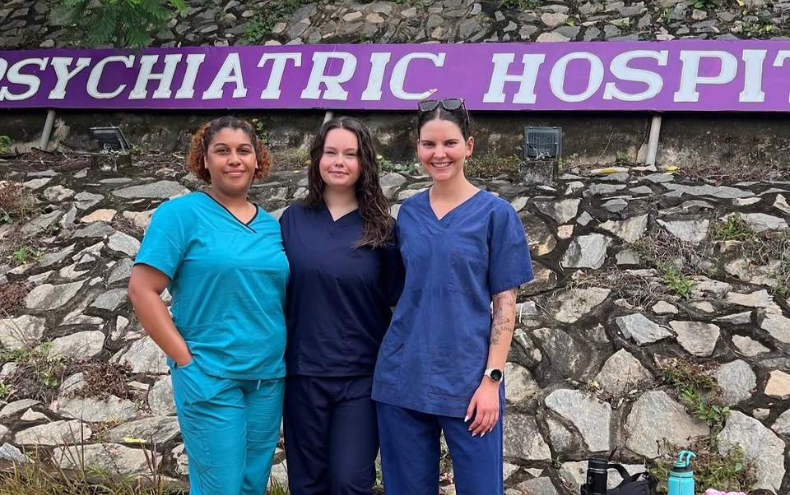
For example, on a Psychology and Mental Health programme, you would learn about and gain experience in delivering counselling, carrying out casework, understanding referrals and diagnoses, and application of theories and the DSM5. You could also be contributing to health and wellness workshops and presentations for people of all ages.
On a Law and Human Rights programme, you support a legal clinic with their administrative tasks as well as having the opportunity to turn your hand to client consultations, case management, client communication, taking notes, document drafting, communications with correct institutional bodies, and research and strategic litigation work.
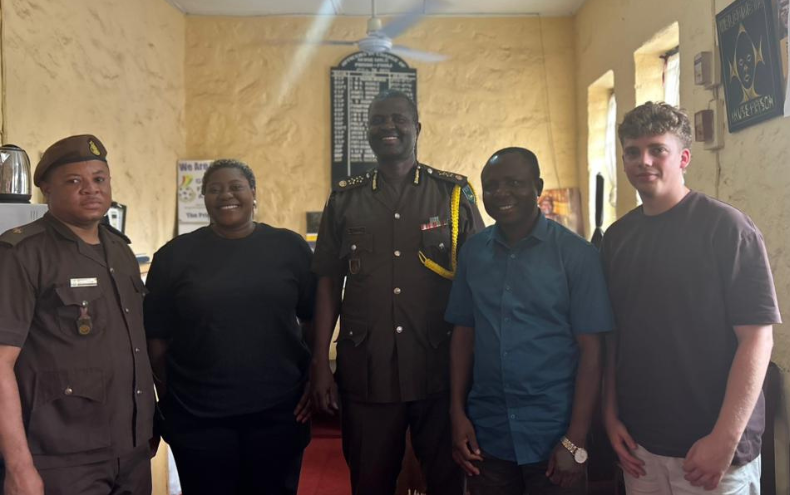
On a Criminology and Law programme, apply the theories you’ve learned on why people commit crime, understand the legal system in the country and experience how the law can affect different groups in different ways – while advocating for change in the justice system.
When you join a programme that provides such hands-on experience (like Vocational Impact’s!), you also learn from industry professionals who can guide you along the way.
While applying for your dream roles, think about everything you got to do during your volunteering experience and how this experience translates into what an employer could be looking for. Get it written down!
Transferrable Skills
There are so many other skills you would have developed while volunteering abroad – and these are adaptable! Have a think about every little thing you encountered and how this has made you a more well rounded employee.
To name but a few –
By traveling abroad to partake in a daunting and likely very new experience, you would have developed your confidence. You now know that you can do something scary with a group of people you don’t really know. In addition, practicing in your field would have built your confidence in that area.
Additionally, adapting to new challenges in a new environment with potentially very different provisions than you are used to at home will demonstrate your flexibility and problem solving skills – another universally useful quality.
Joining a group of volunteers helps you develop your teamwork skills. Working alongside other volunteers to overcome challenges – be it diagnostic discussions, creating workshops or advising clients – collaborating as a team is an invaluable skill that all employers will want to see. Communicating your thoughts and feedback to a team, and working together and addressing problems are skills that will serve you in all walks of life and all industries.
Furthermore, when you are dealing with people’s health, legal status or court cases there are genuine stakes. Real work on real cases will test and develop your ability to prioritise, work quickly and effectively, and work under pressure.
Moreover, volunteering abroad will see you working with people from different cultural backgrounds, be it clients, professionals, stakeholders or new found friends. This will build your inter-personal skills and your cross-cultural understanding, open mindedness and empathy. Any kind of ethical travel and cultural immersion will help you to understand the perspectives of others, appreciate diversity, and enable you to build meaningful relationships which will serve you well in both your personal and professional life.
How to put your skills on a CV
So, what to do with all of your shiny new skills?
We recommend a section on your CV specially for your volunteering abroad. Some people like to have one CV which they use for everything, while others alter their CV depending on the position they are applying for.
If you are going for an opportunity which is directly related to the field you volunteered in, it could be useful to put this section near the top or beginning of your CV. Employers have an awful lot of applications to sift through, so you want to make their lives as easy as possible and be sure that they can see at a glance that you are what they are looking for.
If you want to get your experience on your CV more generally, perhaps list volunteering between your education and work experience.
List the position, the place, the company, and the date that you volunteered, but ensure it matches the format of the rest of your CV too. For example ‘Criminology and Law Volunteer in Ghana, Vocational Impact, June 2026’ – then, get those skills on!
Try to keep your bullet points concise and to the point. You could again generally list what you got up to, or if you have the person specification for the job in front of you then be sure you are covering the requirements that you can.
Try to be result focussed too. On your Law and Human Rights programme, you didn’t just ‘draft submissions’ – you ‘drafted submissions that supported successful appeals against Home Affairs decisions’ (a real example from Valerie!).
“During my time at the law foundation, I worked with around 45 clients on a range of refugee and asylum matters. I drafted submissions that supported successful appeals against Home Affairs decisions, secured renewals of vital documents, and assisted with applications for asylum. […] These experiences gave me the chance to use my legal research and drafting skills in a practical way, and to see first-hand the difference that this kind of work can make for vulnerable communities.” – Valerie
How to put your skills on a cover letter
On a cover letter, you get to be a little more detailed about your skills and experiences. Oftentimes, job descriptions will let you know how long they want your cover letter to be, but anywhere over 1.5 pages gets a little much. Again, these folks will have so many letters to read, so keep it as short as you can.
Again, read the person specification, and try and cover these points in your cover letter – unless they have specified that they want you to write about something else. A great method to use is the STAR method –
Situation: What happened?
Task: What did you need to do?
Action: What did you actually do?
Result: How did it go?
To take previous volunteer Shani as an example –
“I built rapport with a particular client with a diagnosis of bipolar I. […] A particular treatment recommendation was suggested to her, and in session she completely disengaged and was hostile towards this. However across a few conversations with her I was able to steer her in the direction of participating by realigning her with her goals of rehabilitation. […] and when I said my final goodbye to her as I was leaving, I got word that she would soon be discharging. To see this progress and be a part of this breakthrough in a case that was extremely complex was something I will carry with me into my future career.”
So this could become –
“While working as a Psychology and Mental Health volunteer in Ghana with Vocational Impact, I developed my skills recommending and adapting treatments to patients in a psychiatric hospital. For example, a patient experiencing bipolar disorder was disengaged with her current treatment recommendations (Situation). It was imperative that the team ensure that the patient had a treatment plan that worked for her to best treat her bipolar (Task). I had conversations with her and collaborated closely with the team and the patient herself to adapt her plan with her goals and encourage her to engage with her treatments (Action). The client made amazing progress and was discharged from the psychiatric hospital (Result).”
You can see how you can adapt your experiences to fit this template – and don’t be afraid to combine experiences too to get as much into your letter as possible!
However, bear in mind that some employers specifically ask you to write a cover letter about something specific – perhaps why you want the job or why you want to work for them or so on. Be sure to answer their requested question clearly. You can still draw on your experience volunteering to answer these types of questions – you can talk about how your volunteering experiences further inspired and encouraged you or shaped your future career goals. For example, previous volunteer Rebecca said of her time on a Criminology and Law programme in Ghana –
“I was really impressed by all the work the partner project completed within their organisation. I was inspired by Ibrahim and his passion for not only criminal justice issues, but humanitarian issues as well including the breast cancer community outreach and village outreaches. […] The main experience for me was realising I have a genuine passion for helping others, learning and travelling. I know I want to end up in any career that incorporates these aspects and makes me feel like I am making a difference in the world.”
So this could become –
“I am writing to apply for the role of (your dream role) as I wish to enter into a career of criminology in the future. My previous experience volunteering on a Criminology and Law programme in Ghana with Vocational Impact helped me to realise I have a genuine passion for helping others, learning and travelling. I know I want to end up in any career that incorporates these aspects and makes me feel like I am making a difference in the world. Additionally, when volunteering with relevant organisation, I was impressed and inspired by the passion of the team for not only criminal justice issues, but humanitarian issues. Therefore, this role would fit my goals perfectly.”
How to talk about your skills in Interviews
So, your glowing CV and cover letter got you in front of the employers for an interview! Congratulations!
For interviews, get the STAR method involved again.
Situation: What happened?
Task: What did you need to do?
Action: What did you actually do?
Result: How did it go?
This method is popular and well recommended for a reason. It shows that every skill is genuine and has strong evidence behind it.
While preparing for your interview, it is a good idea to come up with some more examples of where you have demonstrated your skills if you can. This way, your experience will look more varied and you won’t just be repeating back what they already know about you from your cover letter.
Often, job descriptions will have already told you which skills they will assess in the interview, so be prepared to answer questions about those skills. And get to know the person specification!
Make sure you prepare well, as the questions they ask will not necessarily be obviously related to that skill. That way, you will recognise what you are being asked about and be able to effectively answer the question.
Don’t be afraid to take a moment to think if you need it – and if they ask you a question that you do not know the answer to: DO NOT LIE! They will be able to tell. Instead, draw on your knowledge and experience learned and use this information to describe what you would do in this situation instead. This will demonstrate that you are adaptable and have initiative and humility.
Of course, you do not only have to use your volunteering abroad experience in your applications and interviews. Tie in your studies, other work experience, other volunteering experience and more. Everything teaches us something, so tie in those transferable skills!
So, best of luck! And don’t forget, if you need references, Vocational Impact is always more than happy to provide them for our lovely previous volunteers.
If you’ve yet to volunteer, we hope this post has demonstrated how much it can benefit you and help to develop your skills.
Why not look into it a little more… enquire below and see how volunteering abroad can bolster your experience and strengthen your CV!